Machining difference

I'm not very well versed in machining and I'm interested to know what's the difference in the process and reason why the small cut is added in the pivot and stop pin portions of the liner on the older of these two 705's. I have found this on more than one older BM model.
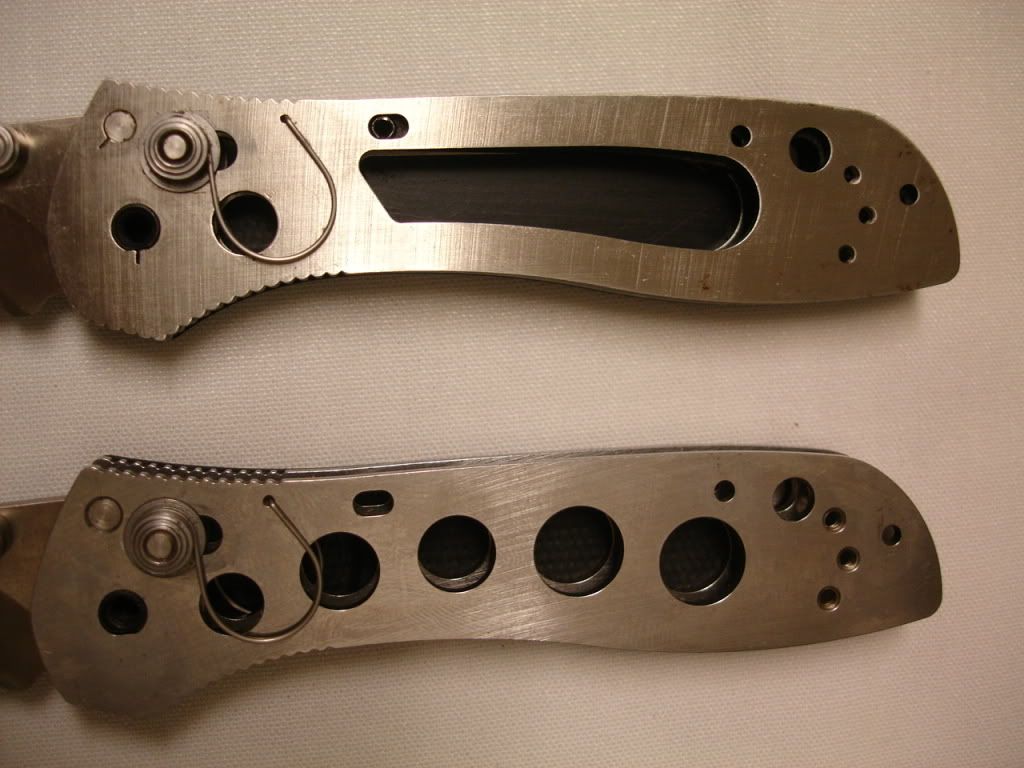
On a side note, this 705 also has a G10 back spacer I have not seen before.
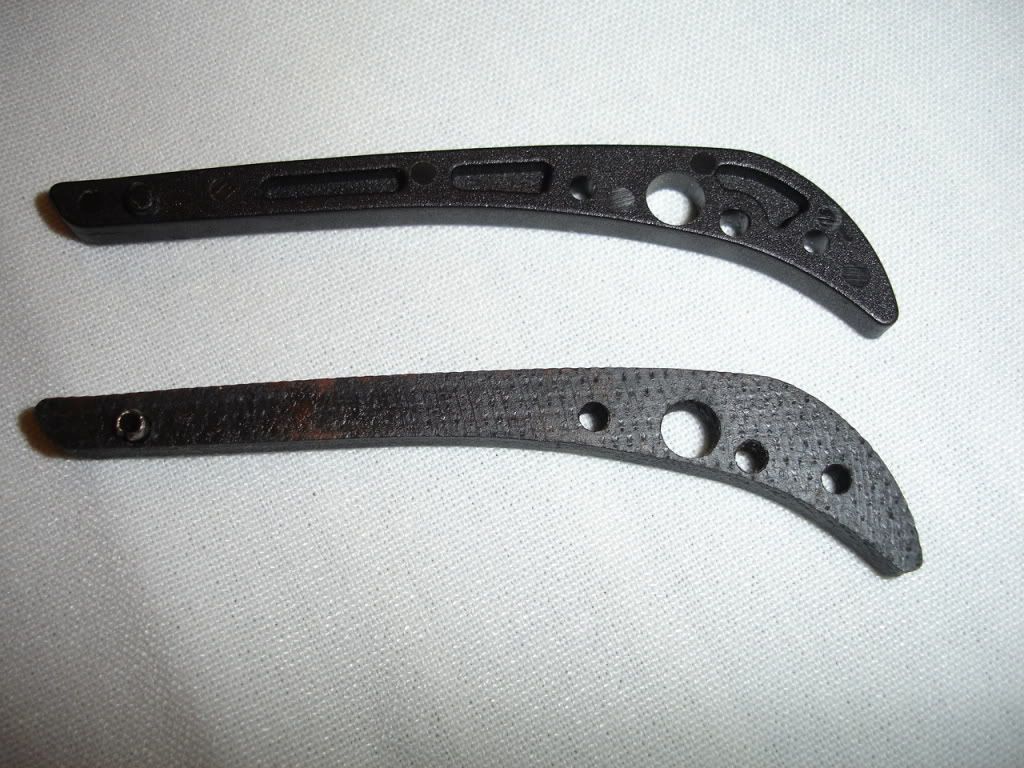
On a side note, this 705 also has a G10 back spacer I have not seen before.
0
-

Not a machinist, but I'll take a W.A.G.: the cut allows for the hole-to-pin tolerances to be designed tighter, preventing wobble. The cut would allow some relief for an overly tight condition. 0 -
Thanks Axis, that makes sense. If that is the case I wonder why BM moved away from this. 0 -

I wasn't around for that little slit, but I'll hazard a guess.
That looks to me like a lead in for a laser, to keep slag out of the critical features. That's why there's one on the stop pin, too. Does the profile look to be laser cut??0 -
Yes, I think that is the case. Here is another example.
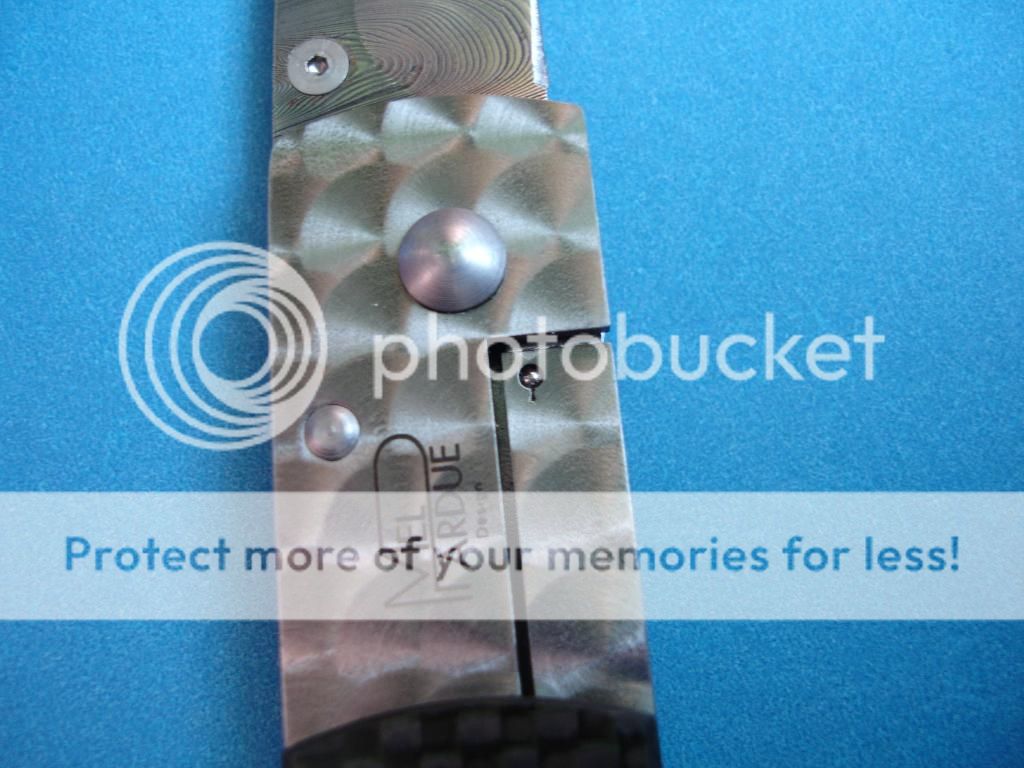 0
0 -
Yup. Same deal! 0 -
quote:Originally posted by BMK Jason:
I wasn't around for that little slit, but I'll hazard a guess.
That looks to me like a lead in for a laser, to keep slag out of the critical features. That's why there's one on the stop pin, too. Does the profile look to be laser cut??
Let me ask a silly question - why wouldn't the lead in start in the center of the hole, where it's going to get removed anyway?0 -
quote:Originally posted by AxisFan:quote:Originally posted by BMK Jason:
I wasn't around for that little slit, but I'll hazard a guess.
That looks to me like a lead in for a laser, to keep slag out of the critical features. That's why there's one on the stop pin, too. Does the profile look to be laser cut??
Let me ask a silly question - why wouldn't the lead in start in the center of the hole, where it's going to get removed anyway?
That's a pretty not-silly question. The reason is that "lead-in" is a bit of a misnomer. It's the location where the laser enters AND exits the cut. Both of which can result in a little gunk in the cut. So we try to get that point outside the critical features without affecting them.0 -
quote:Originally posted by BMK Jason:quote:Originally posted by AxisFan:quote:Originally posted by BMK Jason:
I wasn't around for that little slit, but I'll hazard a guess.
That looks to me like a lead in for a laser, to keep slag out of the critical features. That's why there's one on the stop pin, too. Does the profile look to be laser cut??
Let me ask a silly question - why wouldn't the lead in start in the center of the hole, where it's going to get removed anyway?
That's a pretty not-silly question. The reason is that "lead-in" is a bit of a misnomer. It's the location where the laser enters AND exits the cut. Both of which can result in a little gunk in the cut. So we try to get that point outside the critical features without affecting them.
Thanks - that makes sense.0 -
So.. both liners on the 705's are laser cut but the newer one uses a different process or newer laser or? 0 -
quote:Originally posted by old angler:
So.. both liners on the 705's are laser cut but the newer one uses a different process or newer laser or?
These days 705 and 710 liners are fine blanked, not laser cut. We can hold tighter tolerances and get better, more crisp profile finishes.0 -
Thanks Jason, I had to to my homework on fine blanking and quite the technology. One more question to bother you with, about when did BM stop using laser cutting or do they still use them for some projects. Thanks again for the schooling.  0
0 -
Heh no problem.
We stopped using lasers to cut SS liners about four years ago, I believe. And we'd been phasing it out for years before that, even.
On some SKUs, older versions are laser cut, newer are stamped. A fair number were transitioned in such a manner. All new SS liners are stamped, except liner lock or Nak-lok liners.0 -
Thanks much for the info.  0
0
Please sign in to leave a comment.
Comments
13 comments